What is everyday harm?

Everyone experiences every day harm

People with disability experience everyday harm often. These things can happen in everyday interactions, often go unnoticed and can be unintentional.

Everyday harm can hurt someone’s:

  • emotions
  • mental health
  • physical health
  • growth and learning
  • relationships
  • reputation

 Examples:

  • A worker talks about a person in front of them, not with them.
  • A support worker assumes or tells someone they “can’t” instead of asking.

Why does everyday harm matter? 

Everyday harm might seem small, but it matters because the damage to the person builds up. It does not have to be this way. By learning about everyday harm, we can prevent and address it.  

What can prevent everyday harm?

Everyday harm can be prevented by everyone involved in support relationships: people with disability, support workers, managers, families, and communities.
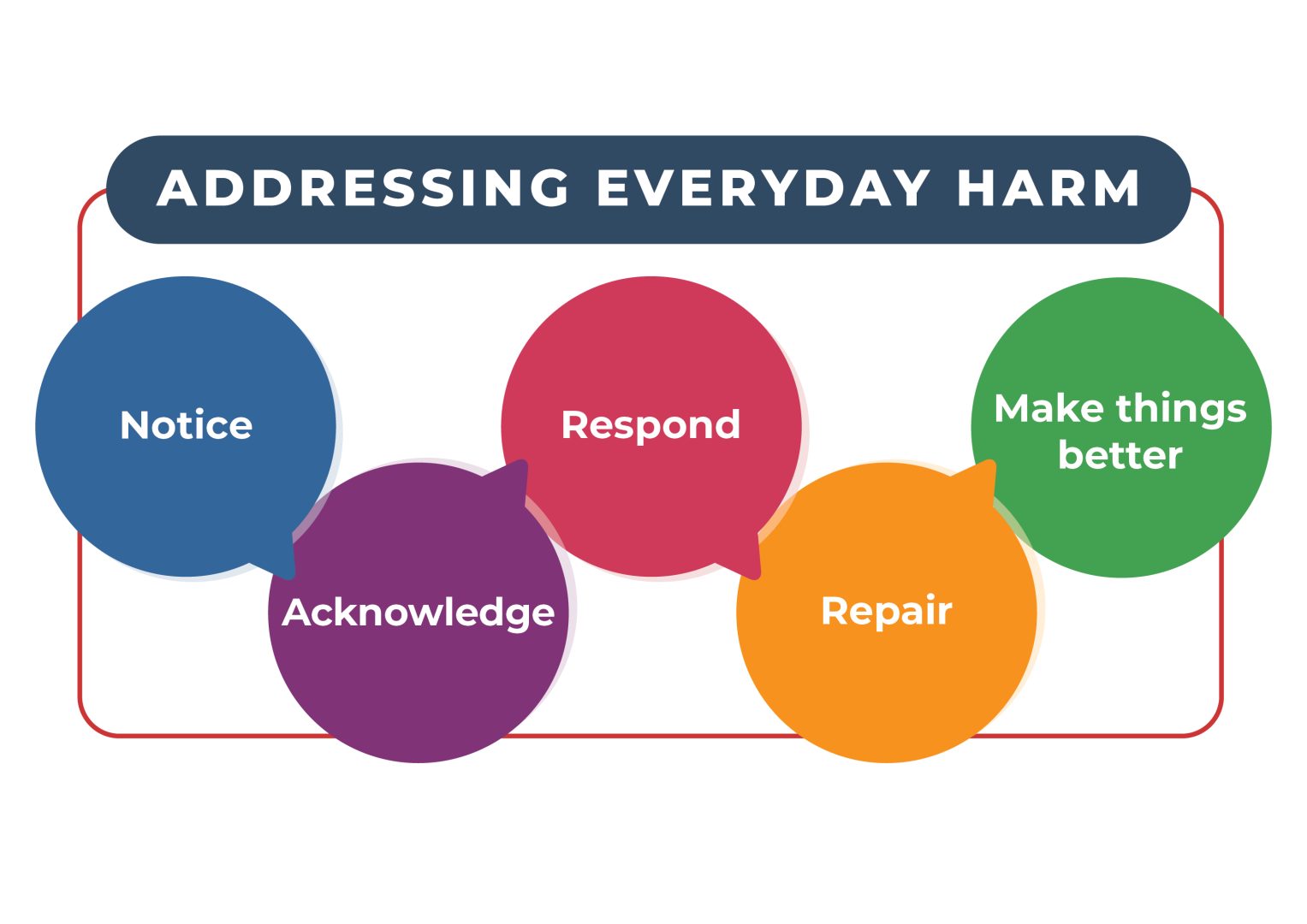
What steps can we take to prevent and address everyday harm?   

We can notice, acknowledge, respond, repair and make things better 

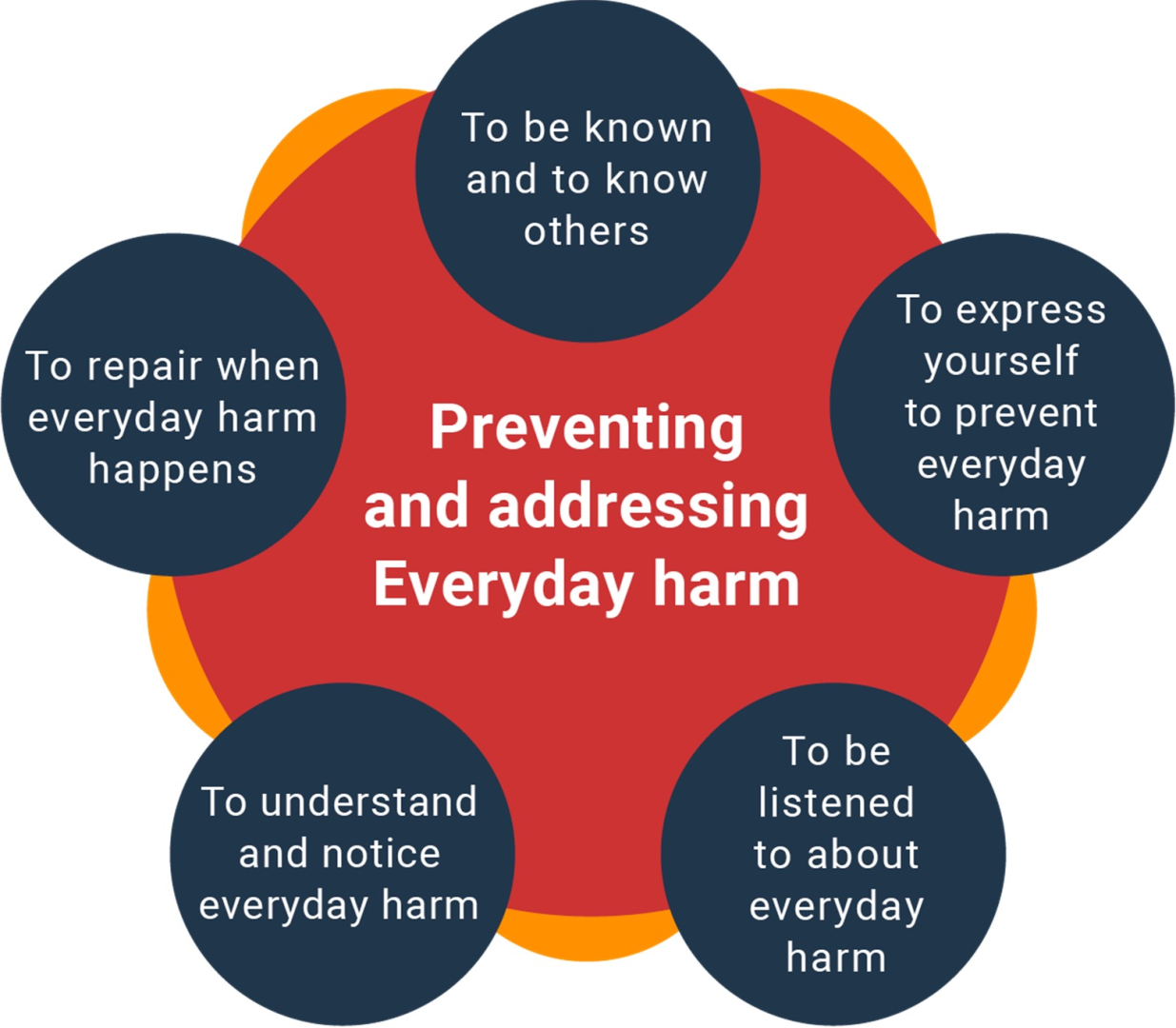
Things that make a difference

1. Knowing and being known – Building trust and relationships

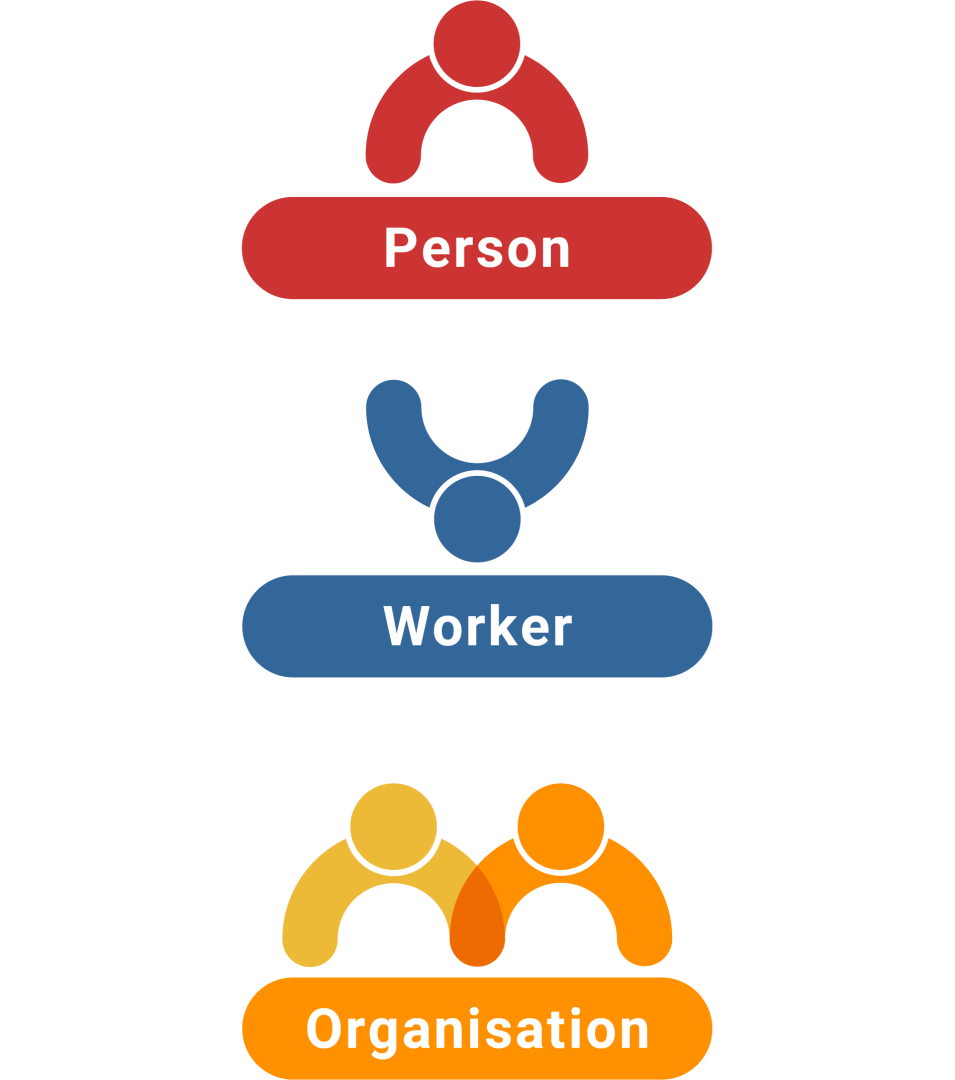
    • Person: “I share how I like to be supported.”
    • Worker: “I make time to really get to know you.”
    • Organisation: “We create space for feedback and communication.”

2. Expression and feedback – Feeling safe to speak up

    • Person: “I give feedback about what support works for me.”
    • Worker: “I ask how to improve and respond with care.”
    • Organisation: “We make it safe to raise concerns in many ways (not just talking).”

3. Listening deeply

    • Workers and managers listen and believe people’s experiences.
    • Listening is part of training and part of daily culture.

4. Awareness and noticing

    • Learn what everyday harm looks like
    • Regular check-ins: “How’s it going?”
    • Support people and staff to notice and name harm.

5. Repair and problem-solving

    • Workers and people reflect together and plan how to do better.
    • Organisations provide tools and support for repair, not just punishment.

What can we do about it?

People with disability:

    • Know your rights
    • Practice saying how you want to be supported
    • Ask for help when something feels wrong

Support workers:

    • Notice and name harm when you see or feel it️
    • Reflect and ask: “Could I do this differently?”
    • Act when something’s not OK, even if it seems small.

Organisations:

    • Build policies and practices that name and prevent everyday harm
    • Hire and train staff who value respect and relationships
    • Provide easy ways for people to speak up
    • Include people with disability in decision-making
    • Notice and respond to harm, don’t ignore it